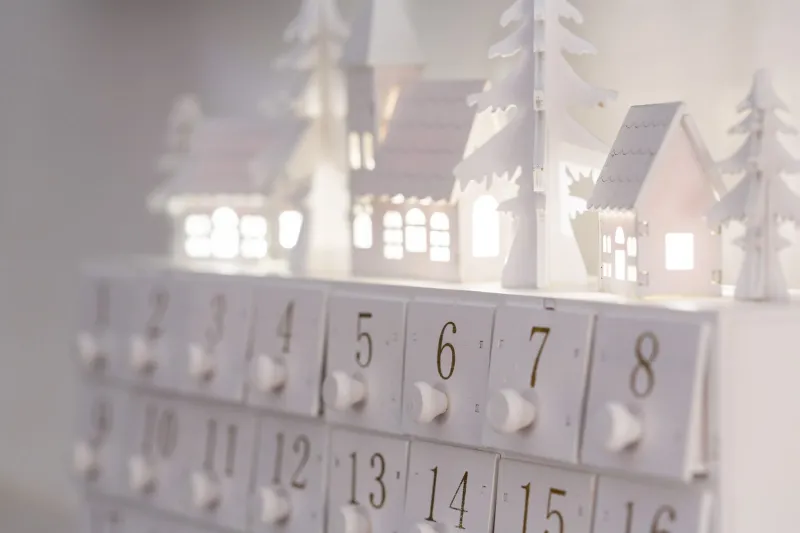
From Notebook Scribble to Door Number 17: The Making of a Ten-Minute Christmas Story
Somewhere in Ohio, months before you'll ever read a word of it, a story is being cut down to size.
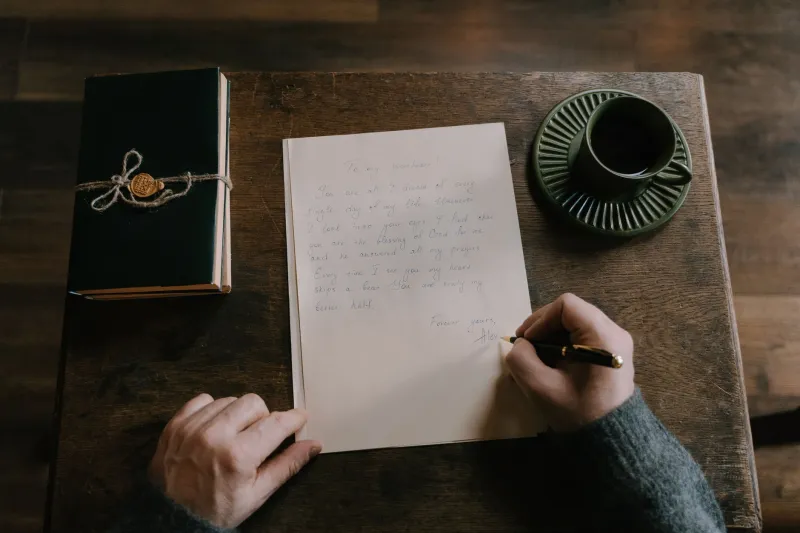
Mara Ellison writes her short fiction longhand first — always in the same spiral notebook, always with the same slightly-bent ballpoint pen. When we caught up with her, she was three drafts into the piece that will land behind door number 17 on this year's Short Story Advent Calendar. She agreed to let us shadow the whole process, and what we found was a reminder that even a story you finish before your cookies come out of the oven carries months of invisible labor.
It Starts With a Date, Not a Plot
Most writers begin with an idea. Advent writers begin with a deadline you can point to on a calendar.
"Editors sent me the date first," Ellison laughs. "December 17th. Not a theme, not a prompt — just the date. So my first question wasn't 'what should this story be about?' It was 'what does December 17th feel like?'"
Her answer: the tired middle of the season. The shine has rubbed off the holidays, the gift pile is half-wrapped, and everyone is running on fumes and cinnamon. That mood became her assignment. A story positioned too early in Advent can lean into anticipation; one on the 24th has to land with a bow on top. The 17th, she figured, belonged to something wry and warm — a tale about a woman stuck hosting her book club during an ice storm, of all things.
"Tone is a scheduling decision," she says. "I'm basically matching a story's temperature to a day on a calendar."
The Tyranny and the Gift of the Word Count
Here's the constraint that shapes everything: the story has to be readable in about ten minutes. For Ellison, that means roughly 1,800 words. No exceptions, no "well, readers can finish it tomorrow."
"A strict word count sounds like a cage, but honestly? It's a gift," she insists. "When you know you can't sprawl, you stop writing filler. Every sentence has to earn its seat at the table."
Her first draft came in at 3,200 words. Nearly half of it didn't survive.
What got cut tells you a lot about the craft of short fiction. The book club hostess's backstory — three paragraphs about her late husband and his fondness for fruitcake — went first. Then a secondary character, a neighbor with a snowblower and a heart of gold, who Ellison admits was "charming and completely unnecessary." What remained was the spine: one woman, one storm, one small realization that sneaks up on her between the appetizers.
"Cutting a character is like uninviting someone from a party," she says. "You feel terrible about it. Then you reread the story without them and realize the party is better."
Writing for a Stranger in a Waiting Room
Ellison keeps a very specific reader in mind, and it's probably not who you'd expect.
"I picture someone killing time — in a pickup outside a hockey rink, in a pharmacy line, in an airport in Minneapolis waiting on a delayed connection," she says. "They have ten minutes. Maybe less. They're not going to give me a second chance."
That imagined reader changes her choices in concrete ways. Openings have to hook by the second paragraph. Names stay simple. No scene can meander. And the ending — the part many literary stories like to leave deliberately foggy — has to land.
"In a ten-minute story, an ambiguous ending reads as a broken promise," she explains. "I'm not saying wrap everything in a neat bow. But the reader has to feel the door closed behind them, not wonder if it did."
The Revision Nobody Sees
The draft that finally went to our editors was draft six. Between drafts three and four, Ellison did something she calls "the read-aloud test" — she stood in her kitchen and read the entire story out loud to nobody, timing herself.
"Your ear catches what your eye forgives," she says. "A sentence that looks fine on the page suddenly sounds clunky when you say it. And if a passage makes me check the time, it'll definitely make a reader check the time."
Our editorial pass asked for two changes: a trimmed opening (the story originally started with two paragraphs of snow description — it now starts with dialogue) and a sharper final line. Ellison fought the first note for about a day, then conceded the note was right. She rewrote the ending line four times before landing on the one you'll read on the 17th.
We won't spoil it. But we will say it's nine words long, and she rewrote it while her oven preheated.
Why Small Stories Are Harder Than They Look
The biggest misconception about flash-length fiction, Ellison says, is that it's easy because it's short.
"A novel gives you room to breathe. You can take the scenic route," she says. "A ten-minute story is a sprint where you also have to be graceful. There's no room for a wrong turn, so you have to know where you're going before you type a word."
She compares it to cooking a single perfect dish versus a full holiday spread. Fewer ingredients, but nowhere to hide.
When we asked whether she'd rather write something longer, she didn't hesitate.
"Ask me again in January," she said, laughing. "Right now there's a door with a 17 on it, and somebody I'll never meet is going to open it, maybe while their cookies bake. That's the whole job. That's the good part."
So when you unwrap this year's story on December 17th — ten minutes, one sitting, zero commitment — know that it represents a notebook, six drafts, one uninvited snowblower neighbor, and a writer in Ohio reading out loud to an empty kitchen.
That's what's behind the little door. Every single time.