The Secret Choreography of December: Why That Funny Story Landed on the 15th
Somewhere in our editing room, there's a whiteboard that looks less like an editorial plan and more like a football coach's playbook. Arrows. Question marks. A sticky note that just says "NOT the 18th" with no further explanation.
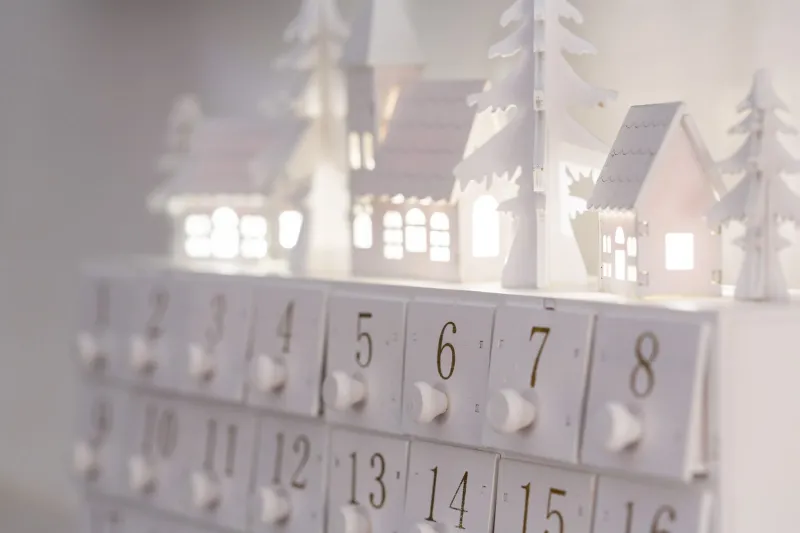
That whiteboard is how we decide which story goes behind which door of our advent calendar — and honestly, the process is part science, part gut feeling, and part happy accident. Since readers keep asking how it all works, we figured it was time to spill the cocoa.
It Starts With the Shape of the Month
Before a single story gets assigned a date, our editors sketch what we call the "emotional weather map" of December. Early doors — the 1st through the 7th — tend to favor warm, welcoming stories. Think first snowfalls, small-town parades, the smell of a fresh pine tree. Readers are just settling into the season, and we want the calendar to feel like an invitation, not a dare.
Mid-December is where things get playful. By the 10th, holiday chaos has fully arrived in every American household — school concerts, office potlucks, that one relative who texts "ur coming right??" — so we lean into humor. A wry story about a disastrous cookie exchange hits different when you're hiding from your own to-do list.
Then comes the stretch we internally call the "deep waters": December 19th through the 23rd. This is when we schedule our more melancholy, reflective pieces. It sounds counterintuitive, but our editors swear by it. The week before Christmas is when people are quietly thinking about the year behind them, the people they've lost, the versions of themselves they meant to become. A bittersweet story on the 21st meets readers where they already are.
And the 24th? It's always the story we'd want to read aloud by the light of the tree. Every year, no exceptions.
Programming a Radio Station, One Story at a Time
Our managing editor has a favorite analogy: sequencing an advent calendar is like programming a radio station. You can't play three ballads in a row. You can't open with your biggest hit. And you never, ever put two stories about grief back to back — no matter how good they are.
"We read for tone, length, and payoff," she told me over a truly alarming number of candy canes. "A ten-minute story follows a five-minute one. A twist ending never follows a twist ending. If the 9th is quiet and literary, the 10th better earn some laughs. Readers feel the rhythm even if they can't name it."
There's data behind the instinct, too. Our team tracks completion rates — how many readers finish each story — and patterns emerged fast. Long stories placed on weekdays in mid-December get abandoned in droves. Short, punchy pieces on Sunday evenings perform beautifully. So the calendar now breathes with the actual rhythm of American holiday life: quick reads on hectic weekdays, roomier stories on lazy weekend mornings.
The Accidental Science (and the Happy Accidents)
Here's the thing, though: some of our best scheduling decisions were pure luck. Last year, a story about a grandmother's last Christmas landed on December 22nd because of a file-naming error. Reader responses poured in — not complaints, but gratitude. People told us it was the story that made them call their mothers. It has since been scheduled for the 22nd every year, deliberately.
That's the accidental science of it all. We plan, we chart, we argue about whether the 14th "feels like a ghost story day." (It does. Ask anyone.) But we also leave room for the calendar to surprise us — because the best gifts usually do.
So when you open tomorrow's door, know this: it wasn't random. Someone read that story three times, moved it on the whiteboard twice, and fought to give it the date it deserved. And someone else said, "Not the 18th."
You're welcome.