Who Decides What You Read on December 9th? Confessions From Our Editing Room
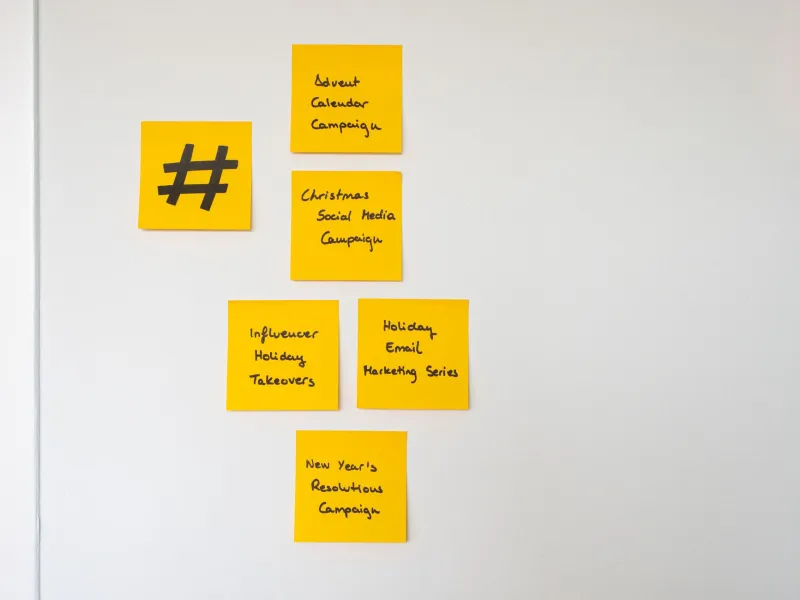
Somewhere around October 12th, our office wall stops looking like an office wall. It becomes a grid: twenty-four rows, twenty-four slots, covered in sticky notes with titles scribbled on them. That wall is where your December gets made.
Readers sometimes assume there's an algorithm behind our calendar — that some software pairs stories with dates and calls it a day. There isn't. There's a small editorial team, a lot of coffee, and a running argument about whether the December 14th slot should go to a story about a diner in Ohio or a story about a father who can't wrap presents. (The father won that year. The diner got the 19th. It was fine. Everyone recovered.)
It Starts With Way Too Many Stories
Every fall, submissions roll in — hundreds of them, from published novelists and first-time writers and a retiree in Vermont who has sent us a story every single year since we launched. We read all of them. Yes, all of them.
The first pass is brutal but simple: does this story feel like it belongs behind a door? Not every good story does. We've had to pass on gorgeous pieces that were simply too long, too bleak, or too dense for a ten-minute read at the end of a December day. A brilliant 6,000-word story is still a 6,000-word story, and our readers have casseroles to bake and flights to catch.
What survives that first cut usually shares a few traits: a single clear emotional arc, a strong final line (we care a LOT about final lines — the last sentence is the door clicking shut), and some kind of warmth. Not saccharine warmth. More like the warmth of a car heater on a cold drive home.
Sequencing Is Its Own Dark Art
Here's the part nobody tells you about: a story advent calendar isn't twenty-four good stories. It's twenty-four good stories in the right order.
Early December is light. People are decorating, energy is high, the semester is ending. So slots one through eight skew funny, sweet, a little whimsical. A story about a dog who steals a Christmas ham. A grandmother's competitive cookie exchange. That kind of thing.
Mid-December is where we take our swings. Around the 10th through the 18th, readers are settled into the ritual — they'll follow us somewhere quieter, stranger, even melancholy. Some of our most beloved stories have lived in this stretch: the one about the lighthouse keeper's last winter, the one told entirely through voicemails. These are the days when we can slow the pace and trust the reader.
Then the final week tightens. The 23rd and 24th slots are the hardest to fill, and here's the confession: we write the December 24th story last, every year, after everything else is locked. It has to land a specific way — hopeful but not corny, complete but still a little open, the narrative equivalent of a porch light left on. We've rewritten the Christmas Eve story as late as December 21st. One year, we swapped it entirely on the 22nd after the whole team read the draft and agreed, silently and simultaneously, that it wasn't the one.
What Gets Cut, and Why
The stories that don't make it usually fail for one of three reasons:
- They're a chapter pretending to be a story. Great voice, great characters, but it ends because the word count ended, not because anything resolved.
- They mistake December for a theme. Snow, cookies, and a red coat do not make a story seasonal. A story set in July can be an advent story if it's about coming home. A story set in a Christmas tree lot can miss the season entirely.
- They're trying too hard. You can smell the effort. Every sentence reaching for a tear. Our readers are smart and tired and do not need to be manipulated into feeling something on a Tuesday.
And sometimes — this is the part that stings — we cut good stories because of the wall. Two stories are too similar to run in the same week. Two endings are too alike. The calendar needs variety the way a holiday table needs more than one dish, so something lovely goes back in the drawer. A few of those drawer stories have found homes in other months, on other projects. None of them are wasted. They're just early for next year.
The Wall Wins
By mid-November, the grid on the wall is full and the arguments are mostly over. Someone reads the whole sequence start to finish out loud in one sitting — a tradition nobody remembers starting — and we listen for the rhythm. Too many sad ones in a row? Swap. Two snowstorms back to back? Swap.
Then the doors close, metaphorically speaking, and the calendar goes out to you: one story a night, chosen by hand, sequenced with love, argued over in a small office while the rest of the country was buying tinsel.
So when you open door number nine this year and find exactly the story you needed that night — that wasn't luck. That was the wall.