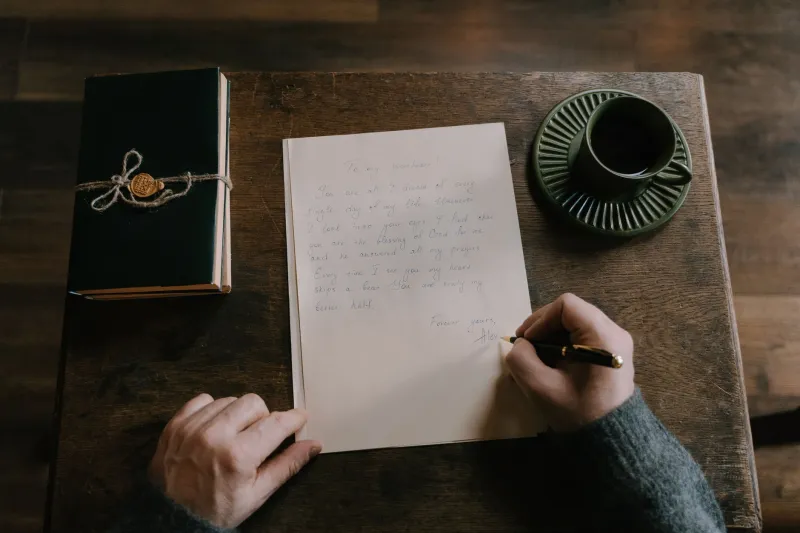
Stopping Mid-Sentence: The Writers Who Leave Advent Doors Deliberately Ajar
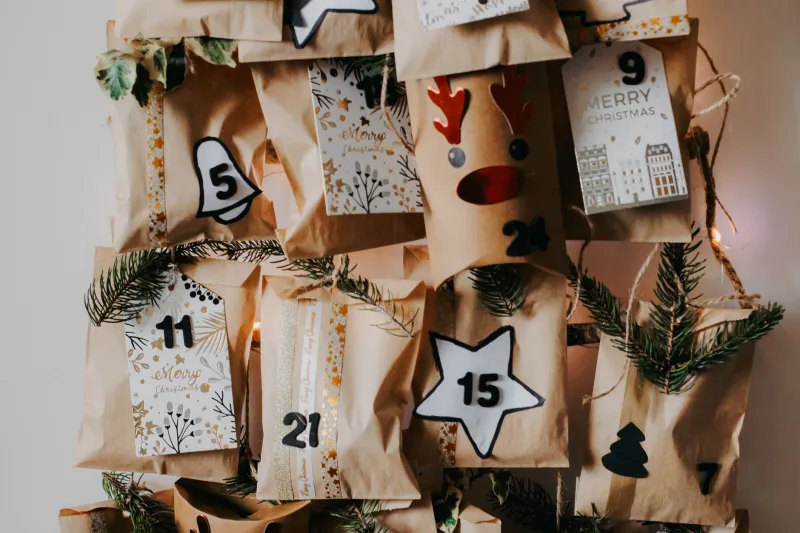
Somewhere behind door 19 this year, readers are going to hit a wall. Not a plot twist. Not a cliffhanger in the thriller sense. Just a story that stops — really stops — before it resolves, and trusts you to carry the rest home.
We didn't do this for shock value. We did it because every December, without fail, the letters start arriving. Not complaints about the open-ended pieces. Complaints about the tidy ones.
"I finished it in the driveway and immediately forgot it," one reader from Portland wrote last year. "But the one that didn't end? I'm still thinking about that guy in the hardware store. It's February and I'm still thinking about him."
That's the whole argument, right there.
The Ending as a Closed Door
Here's the uncomfortable truth about holiday fiction: resolution can be a kind of eviction. The moment a writer explains what happened — whether the estranged sister called, whether the snow let up, whether the old man kept the dog — the reader's job is done. The story moves out. You dust off your hands and reach for the chocolate.
An unresolved story doesn't leave. It stays on the nightstand. It follows you into the grocery store line and the school pickup lane.
"A completed ending is a receipt," says fictional short story writer Dana Okafor, whose 2023 advent piece ended with a woman dialing a phone number we never hear answered. "It proves the transaction happened. But a story that stops short is a key that doesn't quite fit. You keep trying the lock."
Three Writers, Three Ways to Withhold
Not all open doors are built the same. When we talked to writers who've pulled this off, we found three distinct philosophies.
The Soft Stop. Okafor's approach. The plot elements all exist; the writer simply refuses to confirm which outcome occurred. "I know what happened after she dialed," she insists. "I've never told anyone. The story and I both keep that secret." Readers, she says, split into camps — some are sure the call connected, others are certain it didn't — and the piece becomes a small Rorschach test of the reader's own December.
The Structural Gap. Michigan-based writer Ellis Tran once submitted an advent story with an entire scene removed — a missing middle marked only by a line of white space and the narration, "You know what happened in that kitchen." "I'm not being coy," Tran says. "I'm pointing at the reader's own memory. Everyone has a kitchen like that. I'm just refusing to furnish it for them."
The Hard Cut. The most controversial move: ending mid-sentence. One contributor to a seasonal fiction project a few years back stopped a story about a father and son at a frozen lake with the words "And then he said —" Nothing after. The reaction was volcanic. Half the readership was furious. The other half wrote in to say it was the only story from that December they could still recite.
"You have to earn the hard cut," Tran cautions. "If a lazy story stops early, it's just unfinished. If a rigorous story stops early, it's a held breath. Readers can tell the difference in about four seconds."
Why December Makes It Work
Open endings exist year-round in literary fiction — nobody blinks at an ambiguous Alice Munro closer. But they hit differently in an advent context, and we think the calendar structure is the reason.
A daily story arrives with a built-in promise: this is small, this is complete, this will take ten minutes and then you may close the door. Readers approach each one like a wrapped package. When the package turns out to be half-empty on purpose, the surprise lands harder because the container promised otherwise.
There's also the seasonal factor. December is already an unfinished month. We sit inside it knowing the year doesn't wrap up neatly — it just stops, and January starts whether we're ready or not. A story that mirrors that truth feels less like a gimmick and more like company.
"The holidays are full of forced resolution," Okafor says. "Forced cheer, forced forgiveness, forced endings at the dinner table. A story that refuses to resolve is quietly giving people permission to not have everything figured out by the 25th."
The Letters We Keep
Our favorite reader mail from last season wasn't about a story we published. It was about one we published wrong, according to a retired schoolteacher in Ohio, who spent two pages explaining what really happened after our protagonist walked out of the diner. She wasn't asking. She was telling.
That's the payoff. An ending given is a story consumed. An ending withheld is a story handed over — the final paragraph transferred from the writer's custody to the reader's, to be finished however their own December requires.
So if you open a door this year and find the story won't sit still, won't land, won't close — don't check if the file got truncated. It didn't.
Some gifts are wrapped loosely on purpose. So they can be rewrapped, differently, every single year.