One Town, One Book, One Night: Inside America's Christmas Eve Reading Circles
Photo: Trailer screenshot, Public domain, via Wikimedia Commons
Every December 24th, in a handful of American towns, something quietly wonderful happens. Not a parade. Not a festival of lights. A page turn.
In these communities, Christmas Eve isn't just for wrapping presents and streaming movies. It's the one night of the year when an entire town — or at least a committed slice of it — sits down and reads the same story, together, at the same hour. No algorithm picked the story. No publisher promoted it. A librarian, a church group, or a retired schoolteacher did.
If you've never heard of this tradition, that's exactly the point. It exists in the spaces national media rarely reaches: the Carnegie-era library in a town of 3,000 people, the church basement in rural Kansas, the bookstore counter in a Vermont village where everybody knows which regular will cry at the ending.
The Ballot Box Behind the Circulation Desk
The most charming version of this tradition might be the "Christmas Eve election." In the weeks before the holiday, a library posts a shortlist of seasonal stories — think O. Henry's The Gift of the Magi going head-to-head with a Capoté-style tale of small-town snow, or a lesser-known regional writer getting a shot at the title. Patrons vote with paper slips in a jar at the front desk. Kids stuff the ballot box. More than once.
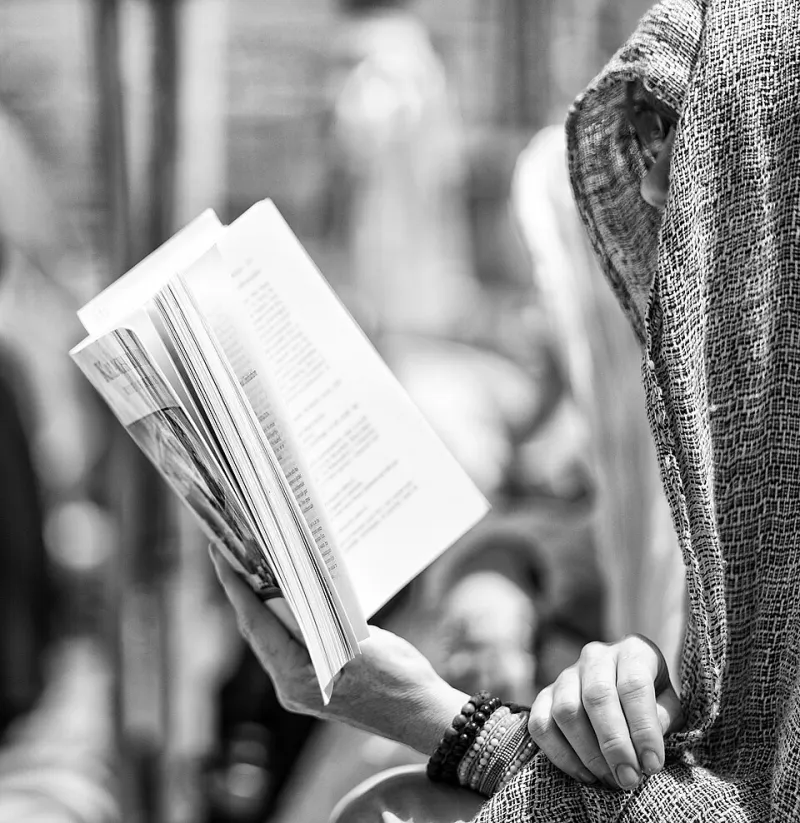
On Christmas Eve, the winning story gets read aloud at a set hour — 6 p.m. is popular, timed so families can attend before dinner. Some libraries livestream it for snowbound households. Others keep it stubbornly analog: one reader, one lamp, one room full of neighbors.
The vote is the secret ingredient. It sounds trivial, but it transforms passive reading into something closer to civic participation. People campaign for their favorite story. A local teen once reportedly lobbied hard for a Shirley Jackson piece, arguing — successfully — that Christmas Eve could handle a little chill with its warmth.
From One-Room Schoolhouses to One-Room Readings
This isn't entirely new. America has a long history of communal winter reading. Before television, before radio, reading aloud was entertainment — families and neighbors gathered around stoves while someone worked through Dickens or a newspaper serial, chapter by chapter. The tradition survived longest in rural communities, where winter evenings were long and options were few.
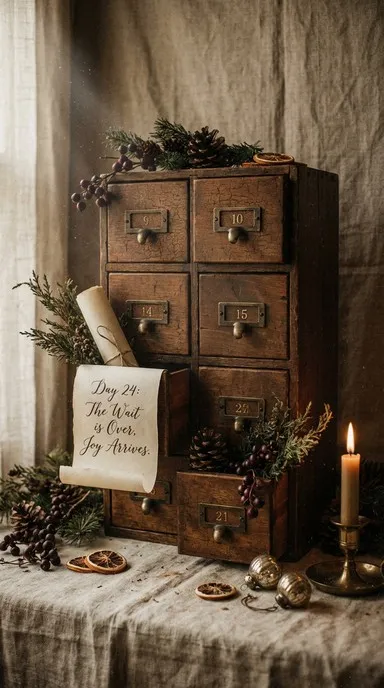
What's happening now is a revival, not a reinvention. Small libraries in the Midwest and New England have dusted off the read-aloud format and given it a seasonal deadline. The one-night, one-story structure borrows from the advent calendar idea that readers of this site know well: the pleasure of a story that belongs to a specific date, that can't be moved or saved or binged.
There's something about the 24th specifically. It's a night when Americans are already primed for ritual. The cookies are baked. The kids are vibrating. Nobody wants to start a novel. But a single story, fifteen minutes long, read out loud? That fits perfectly in the gap between the last church service and the first wrapping paper tear.
What These Nights Actually Look Like
Ask around and you'll hear variations:
- The countdown library. Some libraries run advent-style events all December — a story a night in the children's room — and save the biggest one, the community-voted winner, for Christmas Eve itself. Regulars describe the room filling up with regulars and strangers in roughly equal measure.
- The church-and-coffee version. In some towns, the reading happens after the Christmas Eve service, in the fellowship hall, with hot chocolate and a rotating cast of readers — the mayor one year, the high school drama teacher the next.
- The porch-light circle. The smallest version: a few families on one street agree to read the same story at the same time in their own living rooms, then gather afterward for cocoa. It's a book club collapsed into a single night, with none of the homework.
What they share is scale. These aren't citywide literary festivals. They're intimate by design, often drawing a few dozen people — which, in a town of two thousand, is a genuine crowd.
Why It Works (And Why It's Rare)
There's a reason shared reading feels different from shared streaming. Watching the same movie in separate houses is parallel consumption. Reading one story at the same moment — especially out loud, in one room — is closer to singing the same song. Everyone arrives at the ending together. There's a collective breath when it lands.
The rarity is mostly a logistics problem. It takes someone with institutional trust — a librarian, a pastor, a beloved teacher — to put it on the calendar, and someone stubborn enough to do it every year until it becomes tradition. Most attempts die in year two, not because the idea fails but because the organizer moves or burns out.
The ones that survive share a trait: low stakes. No admission, no committees, no dress code. Just a story, a time, and a door that's open.
Start One on Your Street
Here's the good news: the barrier to entry is almost comically low.
- Pick a story. Short — under fifteen minutes read aloud. Public domain classics (The Gift of the Magi, Dickens's The Christmas Carol condensed, a Willa Cather winter piece) avoid any rights headaches.
- Set a time. Early evening on the 24th, before dinners pull people away.
- Add the vote. If you have a neighborhood group chat or a library connection, offer two or three options and let people choose. Ownership breeds turnout.
- Read it aloud. Even if it's just four neighbors and a dog. Rotate readers by paragraph — it keeps kids engaged and takes pressure off any single person.
- Do it again next year. Traditions are just things that happened twice, said out loud with confidence.
And if you want a running start, borrow the advent calendar spirit: read a different short story each night of December leading up to your Christmas Eve main event. By the time the 24th arrives, you won't be starting a tradition — you'll be finishing one.
Somewhere in America this Christmas Eve, a library light will stay on a little later than usual, and a room full of people who barely know each other's names will reach the last line of the same story at the same second. It's not a national movement. It doesn't need to be. It just needs a street, a story, and someone willing to open the door.